
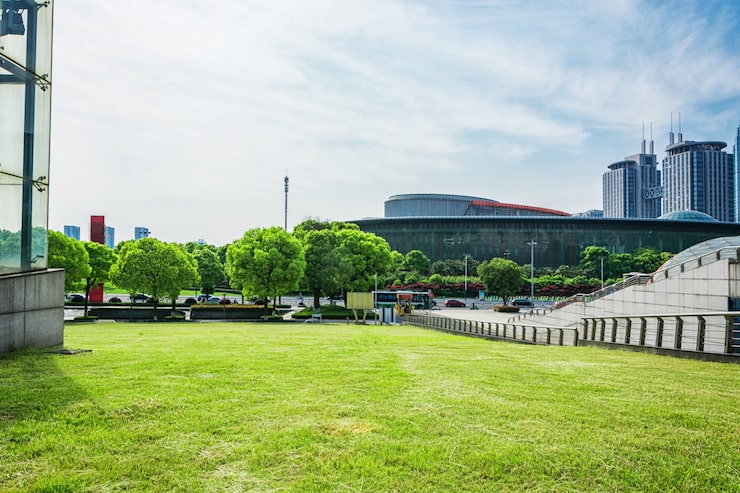
We took on a strip mall in southeast Calgary last spring after the property management company fired their previous lawn contractor. The previous contractor had quoted aggressively low to win the contract, then cut corners through the season to make the margins work. Service had degraded steadily for two seasons. Mowing was inconsistent. Edges were ragged. Clippings were left on sidewalks. Tenants had started complaining to the management company about the property’s appearance.
The new contract is roughly 18 percent higher than the previous one. The property has not looked this good in three years. Tenant complaints dropped to zero within a month. The math turned out to favour the slightly more expensive service that actually showed up and did the work.
That outcome is typical of commercial lawn mowing in our experience. The lowest-bid contract often costs more across two years than the slightly higher bid that delivers consistently. What follows is the practical side of commercial property lawn maintenance, what makes it different from residential, and how to avoid the common mistakes.
What Makes Commercial Different
Several factors distinguish commercial work from residential:
Property scale. Commercial properties typically have lawn areas of several thousand to tens of thousands of square metres. Requires commercial-grade equipment and crew sizes residential service does not need.
Visibility and appearance standards. Lawn condition affects tenant satisfaction, customer perception, and property values. Standards run higher than residential. Inconsistent service produces immediate complaints, exactly like the southeast Calgary strip mall.
Operational scheduling. Mowing has to happen at times that do not interfere with tenant operations, customer traffic, or facility use. Early morning, late evening, or weekend scheduling is often required.
Liability and insurance. Commercial properties carry liability exposures residential properties do not. Service providers need appropriate insurance coverage and demonstrated safety practices.
Regulatory compliance. Some commercial properties have specific regulatory requirements (healthcare facilities, food service, regulated industries) that affect how lawn maintenance can be performed.
Contractual complexity. Commercial agreements typically run multi-year with specified scope, performance standards, and termination terms. Contract structure matters more than in residential service where verbal agreements sometimes suffice.
Service Scope on Commercial Properties
A typical commercial mowing contract includes more than mowing:
Weekly or bi-weekly mowing across all lawn areas, scheduled at times that work for property operations.
Edging along sidewalks, driveways, parking lot edges, and garden bed perimeters. Edging gives commercial properties the clean professional appearance that distinguishes well-maintained sites.
Trimming around obstacles. Signs, lighting poles, fire hydrants, transformer boxes, fence lines. Commercial properties typically have substantially more obstacles per unit area than residential.
Cleanup of clippings from sidewalks, parking lots, entry areas, and other hardscape. Clippings left on commercial hardscape create a poor appearance and can stain concrete or pavement.
Garden bed weeding and mulch refresh, often combined with the mowing routine or scheduled separately.
Seasonal services including spring cleanup, fall leaf removal, and irrigation startup and shutdown.
Snow removal during winter, often under a separate agreement or as part of an annual maintenance contract.
Scope variation between minimal mowing-only contracts and comprehensive maintenance agreements is substantial. The right scope for a specific property depends on appearance standards, surrounding maintenance arrangement, and budget.
Pricing Models
Commercial pricing follows several common structures:
Per-visit pricing. Service provider quotes a fixed price per mowing visit, billed monthly based on actual visits performed. Works well for properties with consistent service requirements. Clear cost transparency.
Monthly contract pricing. Fixed monthly amount across the growing season covers all visits regardless of weather variations. Budget predictability, though it can result in over-payment during slow-growth periods.
Annual contract pricing. Single annual amount covers the full year including seasonal cleanup, mowing, and any specified additional services. Simplifies budgeting and aligns provider incentives with overall property condition rather than visit count.
Hybrid pricing. Monthly base fees for routine service combined with specified rates for additional services, supplemental work, or emergency response.
Right pricing model depends on property needs and property manager preferences. Most established commercial service providers can quote any of these structures.
Typical price ranges across southern Alberta:
Small commercial properties (under 1,000 square metres of lawn): $300 to $800 per month during growing season.
Mid-sized commercial properties (1,000 to 5,000 square metres): $800 to $2,000 per month.
Larger commercial properties (5,000 to 20,000 square metres): $2,000 to $6,000 per month.
Campus-scale properties (over 20,000 square metres): $6,000 per month and up, often with custom pricing.
Snow removal contracts add roughly 50 to 100 percent to the equivalent landscape contract value depending on the property’s snow removal scope.
Scheduling and Operations
Commercial scheduling involves trade-offs residential service does not face:
Early morning mowing (before 7 AM) avoids customer and tenant traffic. It may conflict with municipal noise bylaws and neighbouring residential properties.
Weekend mowing (Saturday or Sunday morning) works for many commercial properties. The trade-off is limited service provider crew capacity on weekends.
Midweek daytime mowing affects customer experience but is operationally simplest.
After-hours mowing (after 6 PM) avoids peak business traffic but limits visibility for any issues that need to be addressed.
Optimal schedule depends on property type. Retail centres typically prefer early morning or evening. Office complexes can usually accommodate midweek daytime work. Healthcare facilities, hotels, and food service properties often need carefully timed schedules around their operational patterns.
Most commercial service providers can accommodate flexible scheduling. Some charge premium rates for early morning, evening, or weekend service.
Quality Control on Commercial Service
Maintaining consistent quality across commercial mowing requires active management:
Site walk-throughs at regular intervals to verify service quality matches expectations. Quarterly walks work for most properties. More frequent walks are warranted on properties with previous service issues.
Specific quality standards documented in the contract. “Mow weekly” is too vague. “Mow weekly at 7-centimetre height with sharp blades, complete edging along all hardscape, and clean clippings from sidewalks and parking areas” provides specific expectations that can be evaluated objectively.
Communication channels for issues. Property managers need a way to report problems and a service provider commitment to respond promptly. Long delays between problem identification and resolution erode service quality over time.
Performance metrics where appropriate. Some larger commercial contracts use specific metrics (response time on issues, complaints per period, missed visits) that allow objective performance evaluation.
Annual review with documented feedback. Even successful contracts benefit from a structured annual review that identifies areas for improvement.
The investment in quality control pays back through better service. Providers respond to clients who pay attention. Clients who set up the contract and walk away often see service quality degrade over time. The southeast Calgary strip mall situation came from exactly that pattern.
Contact “PROPERTY WERKS” For More Information:
Address
1147 Renfrew Drive NE, Calgary, AB T2E 5H9
Phone
(403) 239-1269
Hours of operation
Weekdays 9 a.m.–5 p.m.
Website
https://www.propertywerks.ca/calgary
Map
Selecting a Commercial Service Provider
Several characteristics distinguish reliable commercial providers:
Established local operation. Companies that have operated in the local market for years have the equipment, crew, and operational infrastructure to deliver consistent commercial service. Newer entrants may have lower prices but often lack the depth to handle the full range of commercial requirements.
Appropriate insurance coverage. Commercial liability insurance, WCB clearance, and equipment damage coverage are basic requirements. Documentation should be available on request and current.
Equipment capacity matching property scale. The right equipment for a 500-square-metre office complex differs from the right equipment for a 5,000-square-metre retail centre. Service providers should have the equipment to handle the property efficiently.
References on similar commercial properties. Commercial property managers should be able to verify performance by walking similar properties under the provider’s service and talking with the managers of those properties.
Communication infrastructure. The provider should have a main contact, after-hours emergency contact, and documented procedures for handling issues that arise outside normal operations.
Year-round capability or strong winter partner. Properties that need both summer landscape and winter snow services benefit from providers that handle both directly or coordinate seamlessly with winter service partners.
Property Werks provides comprehensive commercial property maintenance across Calgary, Lethbridge, Airdrie, and Red Deer, with the operational scale and tenure to handle the full range of commercial properties from small retail centres through campus-scale developments. The combination of established crews, appropriate equipment, and year-round operation produces consistent service across the multi-year contracts commercial properties typically require.
Common Pitfalls in Commercial Contracts
Several pitfalls regularly trip up commercial property managers setting up new service:
Lowest-bid selection without quality verification. Aggressive low pricing from new market entrants sometimes signals corner-cutting that produces ongoing problems. The southeast Calgary strip mall was exactly that situation. Established providers may quote 15 to 30 percent higher and deliver service that justifies the difference.
Unclear scope definitions. Contracts that specify general service without detailed scope produce disputes when expectations differ. Detailed scope documentation prevents the most common disputes.
No performance terms. Contracts without specified quality standards or remedies for poor performance give the property manager limited recourse when service quality declines.
Multi-year terms without exit clauses. Long-term contracts can lock the property into providers who turn out to be unsatisfactory. Reasonable exit terms protect the property’s interests.
No backup arrangements for service failures. Commercial properties cannot tolerate missed service visits during peak season. Backup arrangements protect against service failures.
What Happened With the Strip Mall
Back to where this started. New contract, slightly higher price, consistent service. Tenants stopped complaining within a month. Property management company reported that one of the tenants signed a longer lease renewal partly because the property finally looked maintained. The lifecycle cost of the slightly more expensive contract turned out to be much lower than the previous “cheaper” arrangement once everything was factored in.
Commercial lawn mowing is more complex than residential service in ways that affect the result. Larger scale, higher visibility requirements, scheduling complexity, and contractual considerations all mean the casual service arrangements that work for residential properties produce problems on commercial sites. Property managers who treat commercial lawn maintenance as a strategic relationship with a qualified provider, rather than a commodity service procured at the lowest available price, consistently get better results. The investment in selecting the right provider and managing the relationship actively pays back through better property appearance, lower management overhead, and longer-term cost stability.
