
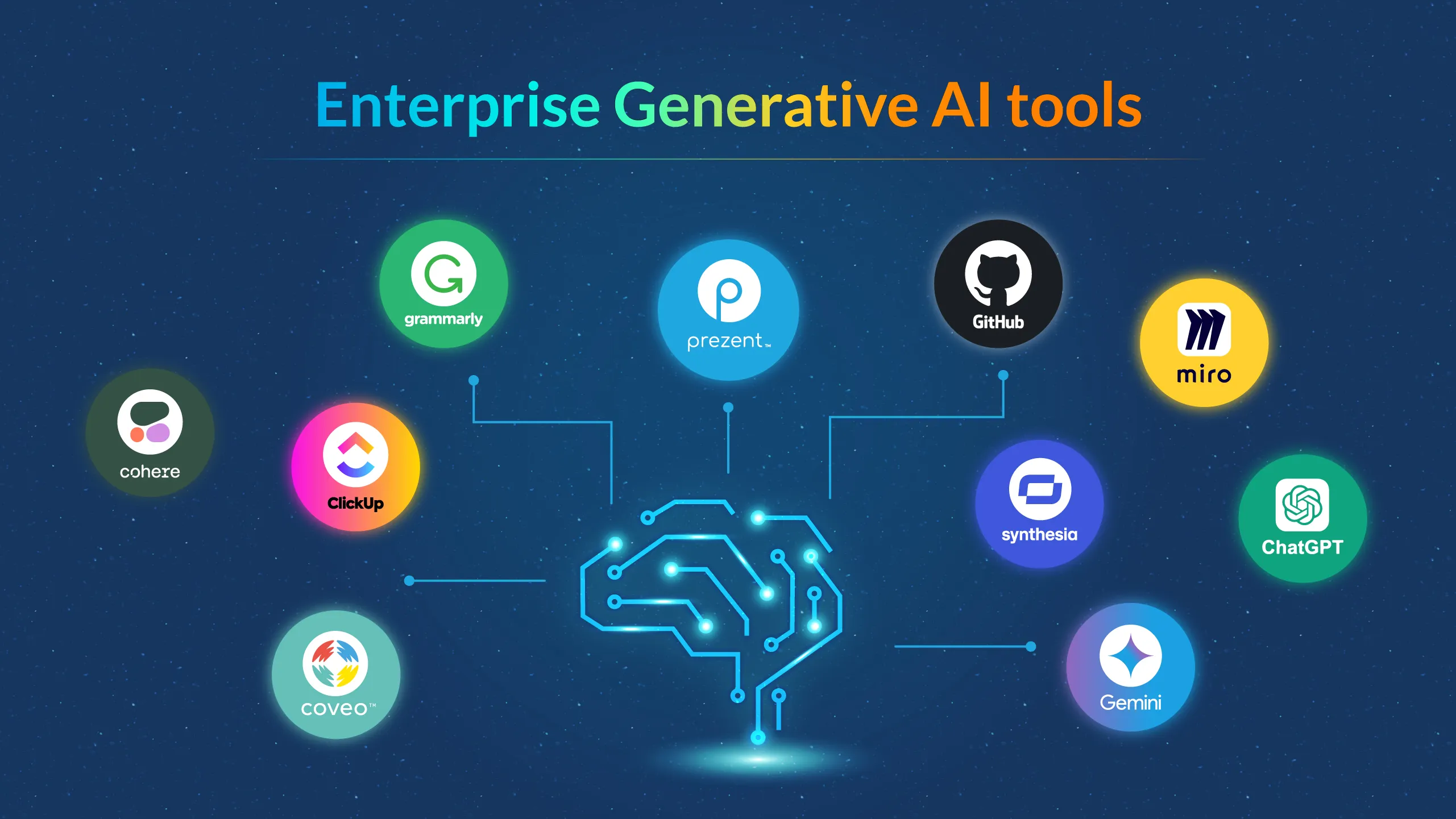
Generative AI tools are rapidly reshaping how we create, work, and solve problems in the digital age. Just a few years ago, artificial intelligence felt distant and experimental for most people. Today, it writes emails, generates artwork, drafts business strategies, and even assists with software development in seconds.
Imagine a small business owner struggling to design marketing materials. Instead of hiring an expensive agency, they open an AI platform, describe their vision, and receive polished content almost instantly. Or think about a student brainstorming essay ideas late at night, guided by an intelligent system that suggests structure and research angles.
This shift isn’t science fiction anymore. It’s a practical reality influencing daily life across industries.
Table of Contents
ToggleThe Rise of Generative AI Tools
The rapid emergence of Generative AI tools stems from advancements in machine learning, natural language processing, and large-scale neural networks. These systems are trained on massive datasets, allowing them to understand patterns in language, images, music, and code.
Unlike traditional software, generative systems don’t simply follow predefined rules. They create new outputs based on learned patterns. That difference is significant. Instead of selecting from a menu of options, users can ask open-ended questions or provide creative prompts.
Tech companies, startups, and research labs have invested heavily in AI development. The results have moved from experimental prototypes to mainstream platforms used by millions.
What makes this moment unique is accessibility. You no longer need a technical background to benefit from AI. Simple interfaces and conversational prompts lower the barrier to entry.
How Generative AI Tools Enhance Creativity
One of the most exciting aspects of Generative AI tools is their impact on creative work. Writers use AI to overcome blank-page anxiety. Designers generate concept art in minutes. Musicians experiment with melodies created by algorithms.
The goal is not to replace human creativity but to amplify it. Many professionals describe AI as a collaborative partner rather than a competitor.
For example, a novelist might ask an AI system to suggest alternative plot twists. A graphic designer may request multiple variations of a logo concept before refining the final version. This iterative process saves time and sparks fresh ideas.
Creativity thrives when friction decreases. AI reduces repetitive tasks, allowing artists to focus on higher-level decision-making.
Business Transformation Through Generative AI Tools
Businesses across sectors are integrating AI into daily operations. Marketing teams generate campaign drafts faster. Customer service departments use AI chat systems to handle common inquiries. HR teams automate job description creation.
Startups, in particular, benefit from cost efficiency. With limited resources, founders rely on AI to accelerate content production and data analysis.
Enterprise companies also leverage AI for internal knowledge management. Employees can query vast databases and receive summarized insights within seconds.
The scalability of Generative AI tools allows organizations to experiment without massive infrastructure investments. Cloud-based platforms make adoption straightforward.
However, businesses must approach implementation thoughtfully. Human oversight remains essential to ensure accuracy and brand alignment.
Education and Learning in the Age of AI
In classrooms and online learning environments, generative systems are reshaping study habits. Students use AI to clarify complex topics, practice coding exercises, and simulate interview questions.
Educators explore ways to integrate AI responsibly. Instead of banning its use, many institutions focus on teaching students how to collaborate ethically with technology.
AI can personalize learning paths. By analyzing progress and performance, systems suggest targeted resources. This adaptability supports diverse learning styles.
Yet concerns about academic integrity persist. Clear guidelines and transparency help maintain trust between students and teachers.
The conversation around Generative AI tools in education continues evolving as schools balance innovation with responsibility.
Ethical Considerations and Responsible Use
With great power comes serious responsibility. AI systems can generate misinformation, biased content, or inaccurate outputs if misused.
Developers work to mitigate risks through safety protocols and content filters. Transparency about data sources and limitations strengthens credibility.
Organizations adopting AI should establish internal policies outlining acceptable use. Regular audits and human review processes reduce errors.
Applying EEAT principles is critical in AI-driven environments. Experience, expertise, authority, and trustworthiness guide responsible deployment.
Users must remember that AI outputs are tools for assistance, not unquestionable truths.
The Role of Generative AI Tools in Content Creation
Content creators have embraced AI for brainstorming, outlining, and editing. Bloggers draft articles faster. Video creators generate scripts. Social media managers craft captions efficiently.
Time savings can be dramatic. Tasks that once required hours may now take minutes. This efficiency allows creators to produce more content or focus on strategy and storytelling.
However, originality remains essential. Audiences value authentic voices and personal experiences. AI-generated drafts often serve as starting points rather than finished products.
The most successful creators use Generative AI tools strategically, blending automation with personal insight.
Impact on Software Development
Programmers increasingly rely on AI to suggest code snippets, detect bugs, and optimize functions. These systems accelerate development cycles and reduce repetitive tasks.
For junior developers, AI can serve as a learning assistant. By explaining code logic and offering alternatives, it supports skill development.
In larger teams, AI tools enhance collaboration by standardizing documentation and code review suggestions.
While AI can write functional code, human expertise remains crucial for architecture design and security considerations.
The partnership between developers and intelligent systems is redefining productivity norms.
Challenges and Limitations of Generative AI Tools
Despite impressive capabilities, AI systems have limitations. They can produce incorrect information confidently. They may misunderstand nuanced instructions.
Overreliance poses risks. Users who skip fact-checking or critical thinking may encounter problems.
There are also concerns about intellectual property. AI models trained on vast datasets raise questions about authorship and ownership.
Regulatory frameworks are still evolving. Governments worldwide are debating guidelines to ensure safe and ethical AI development.
Navigating these complexities requires informed decision-making and transparent communication.
Generative AI Tools and the Workforce
Workforce transformation is one of the most debated aspects of AI adoption. Some fear job displacement, while others see opportunity.
Historically, technological innovation has shifted roles rather than eliminated them entirely. New categories of employment often emerge.
AI literacy is becoming a valuable skill. Employees who understand how to leverage AI effectively gain competitive advantages.
Organizations investing in upskilling programs prepare teams for collaborative human-AI workflows.
The integration of Generative AI tools into workplaces signals evolution rather than extinction of human contribution.
Building Trust Through EEAT Principles
Trust is foundational when discussing AI. Users need assurance that platforms operate responsibly and protect data privacy.
Experience is demonstrated through real-world applications and case studies. Expertise comes from transparent research and technical documentation.
Authority grows when reputable institutions validate AI systems through independent testing.
Trustworthiness is strengthened by clear communication about limitations, data handling policies, and user rights.
Content about Generative AI tools should always prioritize factual accuracy and balanced perspectives.
The Future Landscape of Generative AI Tools
Innovation continues at a remarkable pace. Multimodal AI systems can now process text, images, audio, and video simultaneously.
Integration with augmented and virtual reality may create immersive creative environments. Voice-based AI assistants could become even more conversational and intuitive.
Personalization will likely deepen. Systems may adapt more precisely to individual preferences and professional needs.
At the same time, ethical frameworks and governance structures will shape responsible growth.
The expansion of Generative AI tools marks one of the most transformative technological shifts of our era. From creative industries to corporate boardrooms, from classrooms to startups, AI is redefining what productivity and imagination look like in a connected world.
As individuals and organizations navigate this evolving landscape, the emphasis must remain on thoughtful adoption, ethical responsibility, and human-centered innovation.
Read also :-
