
fastest century in cricket history is one of the most thrilling topics in the world of cricket. Few moments in sports create as much excitement as a batsman racing toward a century at unbelievable speed. The roar of the crowd, the rising scoreboard, and the fearless hitting combine to produce unforgettable memories.
Cricket has evolved dramatically over the decades. From the patient batting of the Test era to the explosive approach of modern T20 cricket, players now aim to dominate bowlers from the very first ball. As a result, the race for the fastest hundred has become a symbol of power, confidence, and fearless batting.
Some of the most iconic innings in cricket history have come from players who were not afraid to attack. These innings were not just about scoring runs but about changing the momentum of the match and rewriting record books.
In this article, we will explore the incredible stories behind the fastest centuries ever scored in cricket, the players who achieved them, and how these performances reshaped the game.
The Evolution of Fast Scoring in Cricket
For much of cricket’s early history, scoring quickly was not the primary goal. Test cricket focused on patience, technique, and endurance. Batsmen often spent hours building their innings, sometimes taking an entire day to reach a century.
However, the arrival of limited-overs cricket in the 1970s began to change everything. One Day Internationals introduced a new mindset. Teams suddenly had a limited number of overs to score as many runs as possible.
This format encouraged aggressive batting. Players began experimenting with innovative shots, attacking field placements, and power hitting.
Then came T20 cricket in the early 2000s, and the transformation became even more dramatic. Batsmen were expected to dominate bowlers immediately. The pace of scoring increased dramatically, and centuries began to arrive faster than ever before.
The concept of the fastest century in cricket history became more competitive as players pushed the limits of what seemed possible.
Fastest Century in Cricket History in International Matches
When people talk about explosive batting in international cricket, one name immediately comes to mind.
In 2015, AB de Villiers stunned the cricket world with a record-breaking performance against the West Indies. Playing in Johannesburg, he reached his century in just 31 balls.
The innings was pure entertainment. De Villiers hit boundaries in every direction of the ground. Bowlers struggled to contain him, and the crowd witnessed a historic moment.
His batting was not just powerful but also incredibly creative. He used scoops, reverse shots, and classic drives, showing why he was considered one of the most innovative batsmen of his generation.
That day, he set the benchmark for the fastest century in cricket history in One Day Internationals, a record that still stands as one of the most astonishing feats in cricket.
The Legendary Innings That Changed Cricket
Every great record has a story behind it, and the fastest centuries often come during moments when the match situation demands boldness.
For example, Corey Anderson shocked the cricket world in 2014 when he smashed a century in 36 balls for New Zealand against the West Indies. At the time, it was the fastest ODI century ever recorded.
What made the innings remarkable was the sheer power behind his shots. Anderson cleared the boundary repeatedly, showing that modern batsmen could dominate even experienced bowlers.
Just a year later, AB de Villiers broke that record in spectacular fashion, proving that cricket records are constantly evolving.
These performances demonstrated that aggressive batting was becoming the new normal in modern cricket
The Role of T20 Cricket in Fast Centuries
T20 cricket has completely changed the mindset of batsmen around the world. Players now train specifically to score quickly, using advanced fitness programs and power-hitting techniques.
Franchise leagues such as the Indian Premier League have also played a major role in encouraging attacking cricket. The pressure to entertain and score rapidly has pushed batsmen to develop new skills.
Today’s cricketers are more athletic, more innovative, and more fearless than ever before.
Because of this transformation, the race for the fastest century in cricket history continues to intensify across different formats.
Young players now dream of breaking records that once seemed impossible.
Fastest Century in Cricket History in T20 Matches
While international records often grab headlines, domestic T20 leagues have also witnessed some breathtaking centuries.
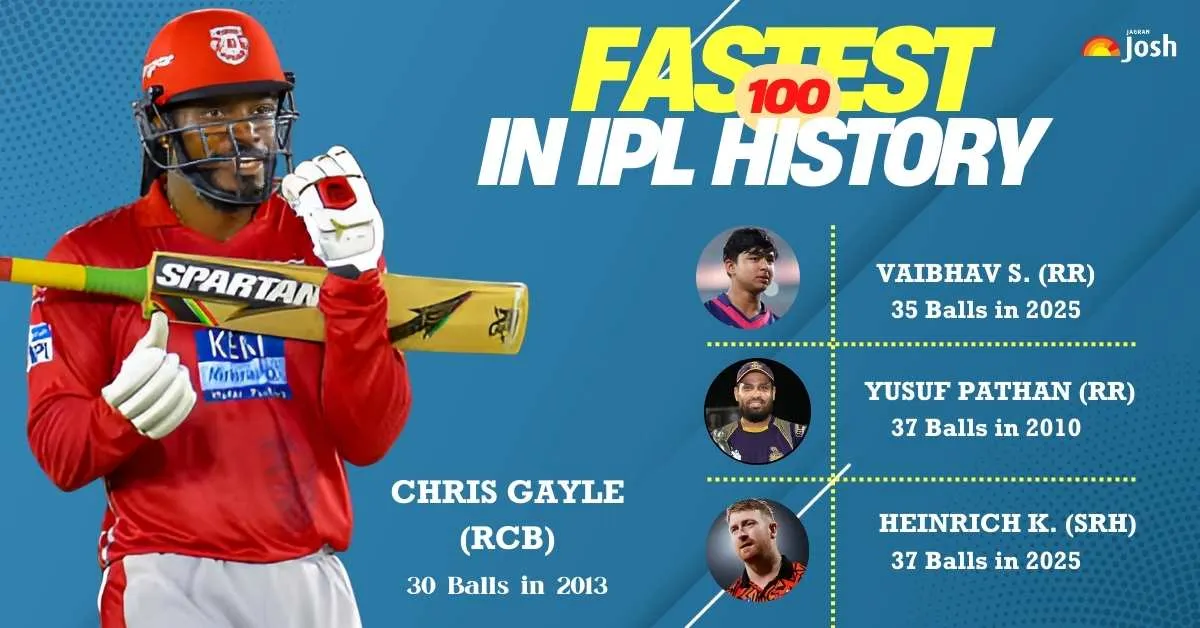
Chris Gayle, widely known as one of the most destructive batsmen in cricket, delivered a legendary performance in the Indian Premier League in 2013.
Playing for Royal Challengers Bangalore, Gayle reached his century in just 30 balls against Pune Warriors India.
The innings was a brutal display of power hitting. Gayle smashed bowlers all over the ground, finishing with an incredible 175 runs not out.
This performance is often remembered as one of the most destructive innings in T20 history and remains a benchmark for explosive batting.
How Modern Batsmen Achieve Faster Centuries
Several factors have contributed to the increasing speed of centuries in modern cricket.
First, batsmen now use advanced equipment. Modern cricket bats are designed with thicker edges and larger sweet spots, allowing players to hit the ball farther with less effort.
Second, fitness and training have improved significantly. Players spend hours practicing power hitting, improving their reflexes and timing.
Third, strategies have evolved. Teams encourage aggressive batting from the start rather than waiting to accelerate later in the innings.
All these factors have made it easier for players to chase records like the fastest century in cricket history.
Psychological Pressure on Bowlers
When a batsman begins scoring at an extraordinary pace, bowlers often experience immense pressure.
Every delivery becomes crucial. One mistake can disappear into the stands for six runs.
As the batsman approaches a century quickly, the fielding team often becomes defensive. Captains adjust field placements, bowlers change their strategies, and tension rises across the field.
Ironically, this pressure sometimes benefits the batsman even more.
Once a player finds rhythm and confidence, stopping the momentum becomes incredibly difficult
Memorable Fast Centuries in Cricket History
Cricket history is filled with explosive centuries that thrilled fans and changed matches.
Shahid Afridi once stunned the cricket world by scoring a century in just 37 balls against Sri Lanka in 1996. At the time, he was only 16 years old, and his fearless approach shocked the cricket community.
Glenn Maxwell, another modern powerhouse, has also delivered remarkable innings in limited-overs cricket. His ability to score quickly under pressure has made him one of the most entertaining players in the game.
These innings remind fans that cricket is not just about statistics but about unforgettable moments that inspire future generations.
The Influence of Stadium Conditions
Another factor that affects fast centuries is the playing conditions.
Flat pitches, short boundaries, and fast outfields often help batsmen score quickly.
Some stadiums are known for high-scoring matches because the conditions favor aggressive batting.
On the other hand, challenging pitches with swing or spin make fast centuries far more difficult to achieve.
When a batsman scores rapidly on a difficult pitch, the achievement becomes even more impressive.
Why Fans Love Explosive Centuries
Cricket fans around the world enjoy watching powerful batting performances.
A rapid century brings excitement, unpredictability, and pure entertainment.
The crowd becomes more engaged with every boundary. Social media lights up with reactions, and commentators struggle to keep up with the scoring rate.
Moments like these capture the essence of modern cricket.
The pursuit of the fastest century in cricket history keeps fans fascinated because it represents the ultimate display of batting dominance
Future Players Who Might Break the Record
Cricket continues to evolve, and new players are constantly emerging with extraordinary talent.
Young cricketers now grow up watching explosive innings from legends. They practice innovative shots from an early age and learn how to adapt to different formats.
With improved coaching, technology, and training methods, it is very likely that even faster centuries will be scored in the future.
Records in cricket are never permanent. Every generation produces players capable of redefining the limits of the game.
The question is not whether the record will be broken, but when it will happen
The Cultural Impact of Record-Breaking Innings
When a batsman scores a record-breaking century, the impact goes beyond the match itself.
Sports news outlets cover the story worldwide. Fans share highlights across social media platforms. Young players watch the innings repeatedly to learn new techniques.
These performances become part of cricket folklore.
They inspire aspiring cricketers to believe that boldness and creativity can lead to greatness.
The journey toward the fastest century in cricket history is therefore not just about statistics but about inspiration and legacy.
How Technology Changed Modern Batting
Technology has also played a role in modern batting performance.
Video analysis allows players to study bowlers in great detail. They can analyze bowling patterns, identify weaknesses, and plan attacking strategies.
Training machines simulate high-speed deliveries, helping batsmen improve reaction time.
Sports science has also enhanced player fitness and endurance.
All these advancements contribute to the increasing number of rapid centuries seen in modern cricket.
Fast Centuries as Match Turning Moments
A rapid century often changes the entire direction of a cricket match.
When a batsman scores quickly, the opposing team loses control of the game’s tempo.
The scoreboard pressure forces bowlers to take risks, fielders to make desperate attempts, and captains to rethink their strategy.
Many historic matches have been decided by explosive centuries that shifted momentum dramatically.
This is why fans continue to celebrate innings that challenge records and redefine expectations.
The Lasting Legacy of the Fastest Century
The pursuit of the fastest century in cricket history represents the spirit of modern cricket.
It celebrates courage, innovation, and the willingness to challenge limits.
Each time a player approaches the record, fans around the world hold their breath, wondering if they are about to witness history.
These moments remind us why cricket remains one of the most exciting sports on the planet.
They show that the game is constantly evolving, driven by players who refuse to settle for ordinary performances.
And somewhere in the future, another fearless batsman will step onto the field, ready to chase the next great milestone.
Read also:-
south africa national cricket team vs sri lanka national cricket team timeline
zimbabwe national cricket team vs south africa national cricket team match scorecard
pakistan national cricket team vs bangladesh national cricket team match scorecard
ireland cricket team vs zimbabwe national cricket team match scorecard
west indies cricket team vs england cricket team match scorecard
afghanistan national cricket team vs zimbabwe national cricket team match scorecard
